
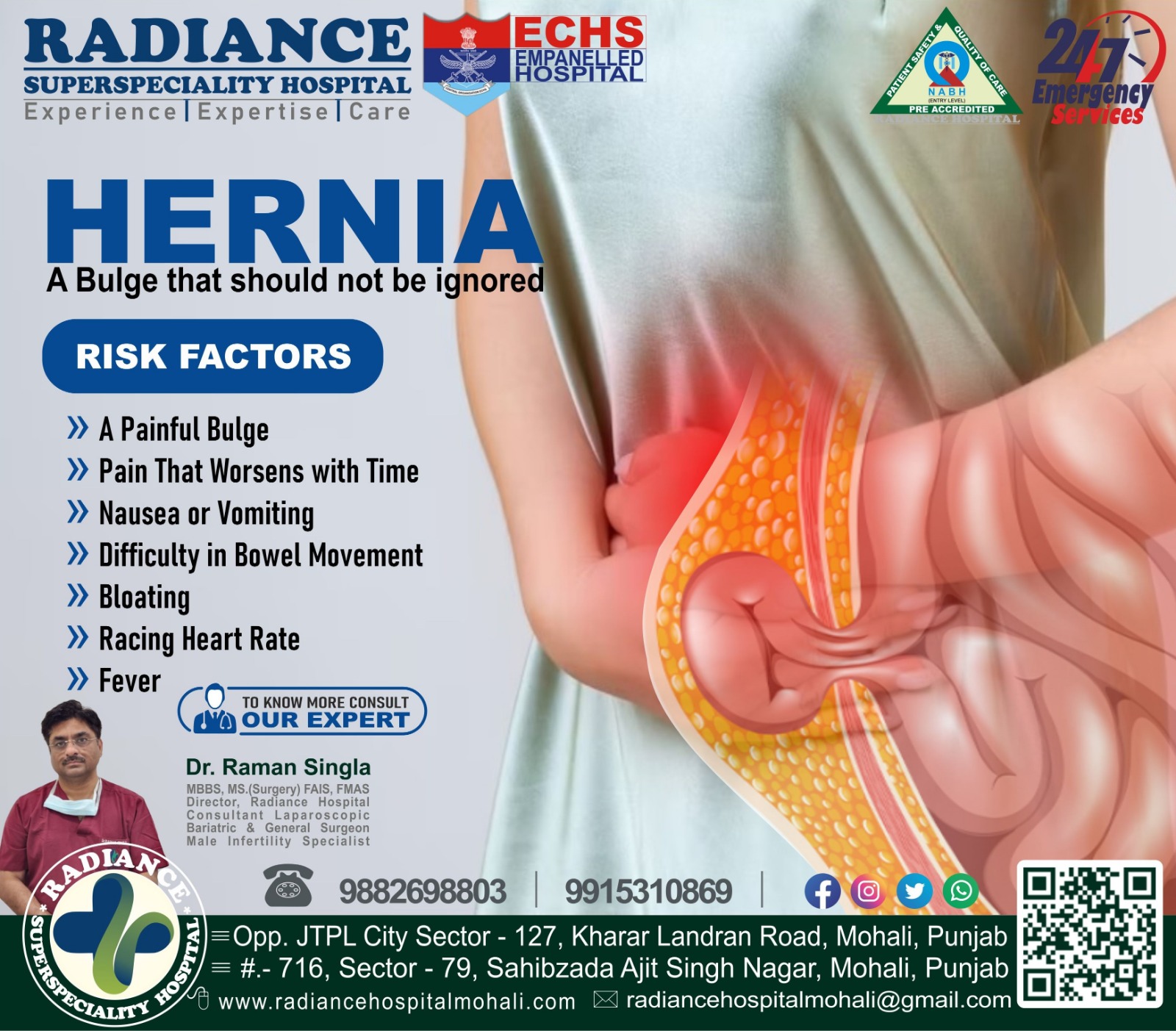
According to Dr. Raman Singla, a prominent laparoscopic surgeon at Radiance Hospital, Mohali, hernia risk factors include a combination of weakened muscle walls and increased abdominal pressure. Key contributors are obesity, chronic constipation, persistent coughing, and heavy lifting, which can push organs through weak spots in the abdominal wall.
Key risk factors highlighted include:
Obesity: Excessive weight puts significant pressure on the abdominal muscles, leading to hernia development.
Chronic Coughing or Sneezing: Persistent pressure from respiratory conditions increases the likelihood of a hernia.
Heavy Lifting and Straining: Physical exertion or lifting heavy objects incorrectly weakens the abdominal wall.
Chronic Constipation: Straining during bowel movements significantly increases abdominal pressure.
Previous Surgical Incisions: Known as incisional hernias, these occur when a prior surgical scar weakens the muscle wall.
Pregnancy: Stretches and weakens abdominal muscles, increasing the risk of umbilical hernias.
Aging: Natural weakening of muscles occurs over time.